


Linear Income vs. Residual Income
Not all the money you earn behaves the same way. Understanding the difference between linear and residual income is essential to designing a strategy that does not rely solely on your time.
Linear income
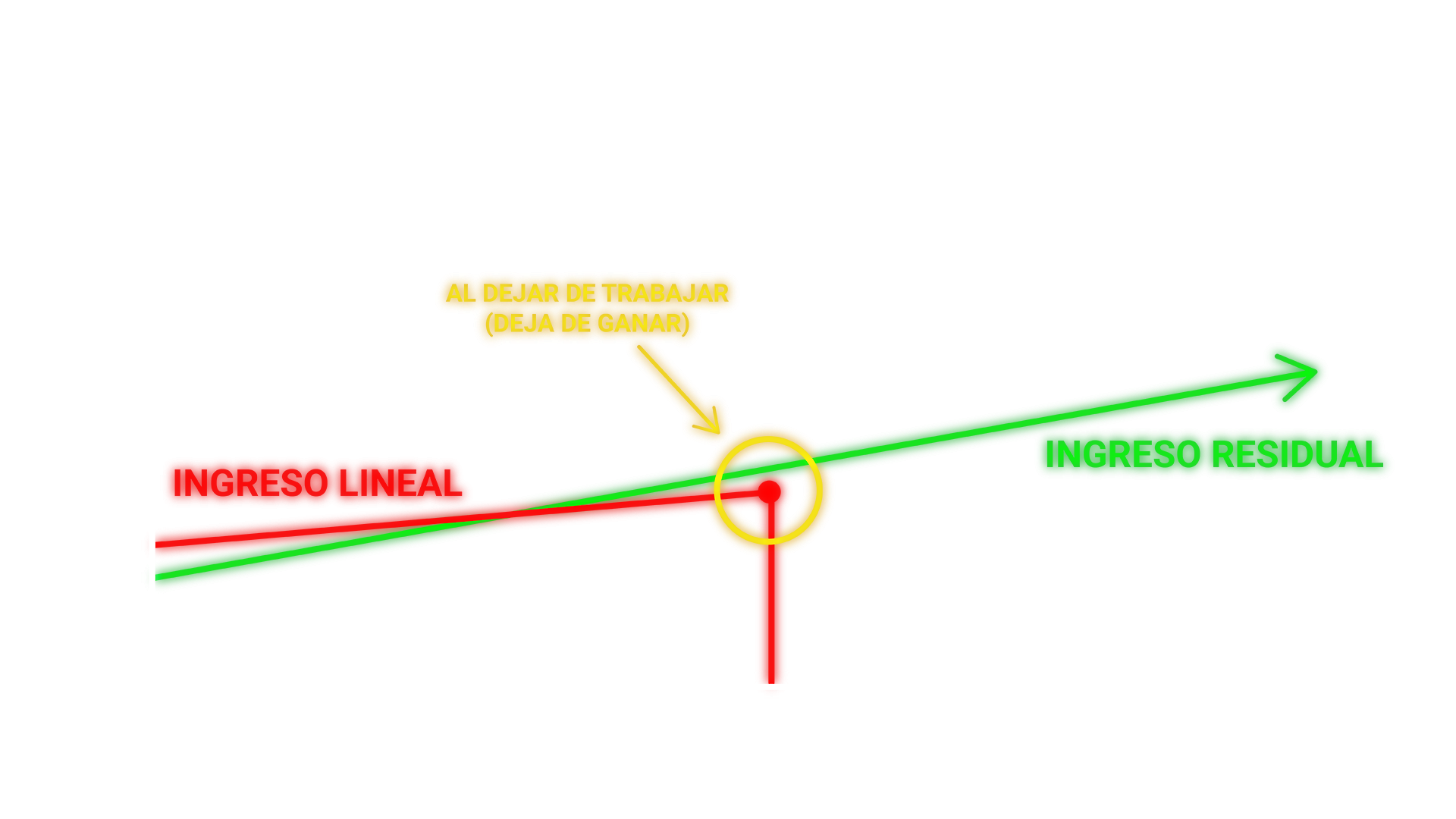
This is income you earn directly in exchange for your time and effort. If you stop working, it stops arriving. Typical examples:
- Salary: what you are paid for your daily work.
- Fees: payment for one-off services, such as consulting or freelance work.
Residual income
Also called passive income, this is income you keep receiving after an initial effort. It requires work or capital up front, but then pays you on a recurring basis. Examples:
- Royalties from a work, course, or piece of content.
- Rent from a property.
- Dividends from investments.
Why the balance matters
Linear income pays your bills today; residual income builds your freedom tomorrow. A sound strategy is not about abandoning one for the other, but about using part of your linear income to create residual sources that, over time, reduce your dependence on active work.